Short answer: empty the closet and edit, then measure. Use our calculator to see how many inches of rod your clothes need. If one rod is not enough, hang a second rod under part of the first for short items, keep one section for long items, switch to slim matching hangers, and put labeled bins on the top shelf.
Step 1: empty it and edit
Take everything out. Yes, everything. It is the only way to see the real size of the space and what you actually own. Sort into four piles:
- Keep: fits, you wear it, you like it.
- Off-season: keep, but not in this closet. Store it under the bed or high up until the season changes.
- Donate or sell: has not been worn in a year, does not fit, or you keep only because it was expensive.
- Fix: missing button, needs hemming. Give yourself two weeks; if it is not fixed by then, it goes.
Wipe the shelf and rod while the closet is empty, and vacuum the floor.
Step 2: measure the closet
Write down the width of the rod, the height from the floor to the rod and to the shelf, and the depth from the back wall to the door. Adult hangers are roughly 17 to 19 inches wide, so a depth of about 24 inches lets clothes hang freely. If your closet is shallower, plan more folded storage and fewer hanging items.
Step 3: work out how much rod space you need
Most people guess. This calculator counts it. The inches per item are starting estimates for slim hangers; for the most accurate result, hang ten of your own shirts, measure how much rod they take, and divide by ten.
Closet rod calculator
Count what you are keeping (step 1), then adjust the inches per item if yours are bulkier.
| Item | How many | Inches each | Total |
|---|---|---|---|
| Shirts and blouses | |||
| T-shirts on hangers | |||
| Pants (folded on hanger) | |||
| Jackets and blazers | |||
| Dresses and long skirts | |||
| Coats |
Step 4: plan the zones
A closet works when each kind of item has a fixed home. Plan on paper first:
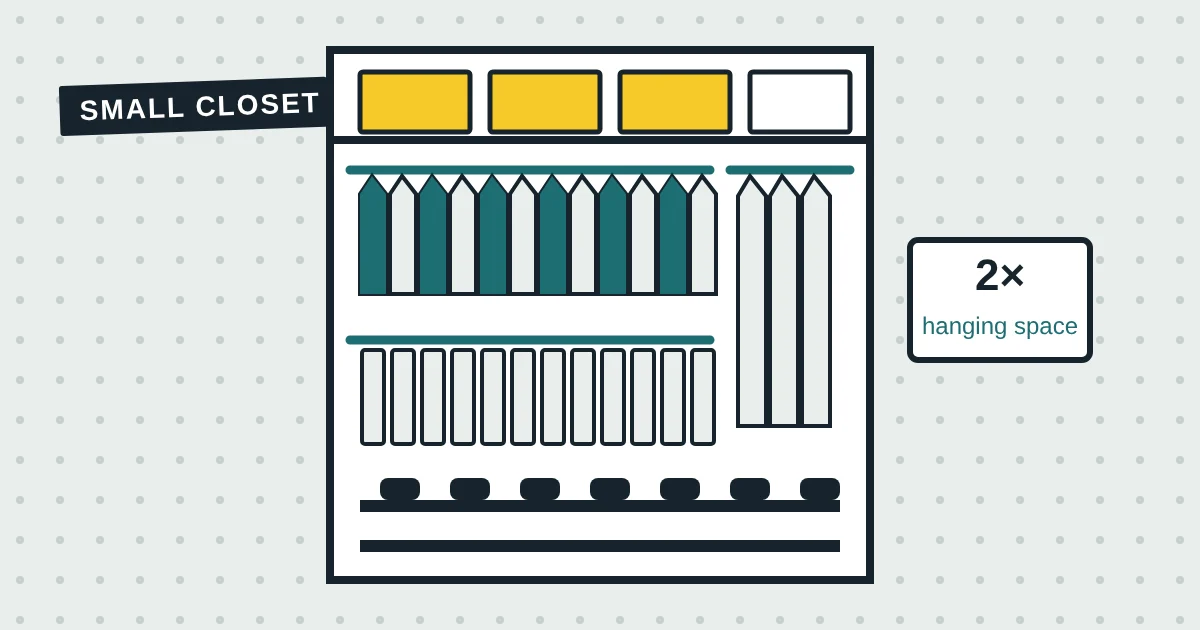
- Double hang for short items: shirts, blouses, pants folded over a hanger, jackets.
- Long hang for dresses, long coats and robes. Measure your longest item; it decides how wide this section must be and how high its rod sits.
- Top shelf for things you use monthly or less: bags, hats, off-season accessories, in labeled bins.
- Floor for shoes, a laundry hamper or a small drawer unit.
- Door for belts, scarves, jewelry or more shoes.
Put what you wear most between your shoulders and knees. That is the easiest band to reach and see.
Step 5: switch to slim, matching hangers
Thick plastic and wooden hangers eat rod space. Slim velvet or thin plastic hangers take much less, and clothes do not slide off them. Matching hangers also make everything hang at the same height, which makes room for a second rod below. Keep a few sturdy hangers for heavy coats and suits.
Step 6: add a second rod
This is the biggest single gain in a small closet. A hanging closet rod (also called a rod extender or doubler) hooks over your existing rod and hangs a second rod below it. No drilling, and you can move it when you move. Hang it under the double-hang section only and keep the long-hang section clear. Check the weight rating and do not overload the original rod, especially if it is a thin builder-grade one.
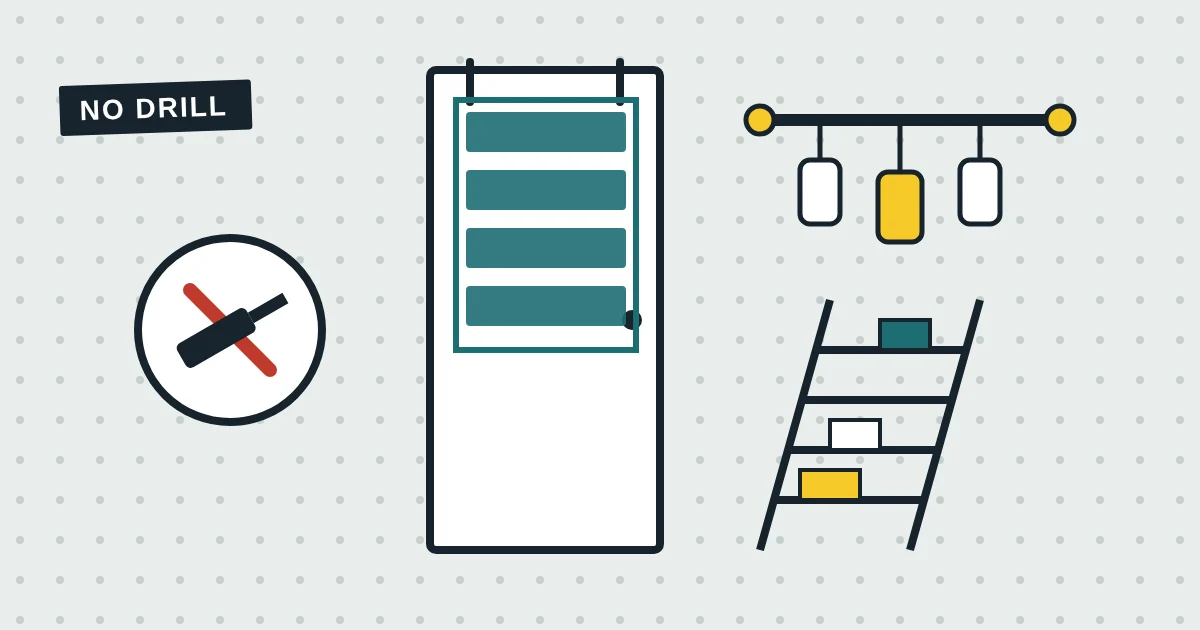
Renting? A hanging rod, shelf dividers, an over-door rack and freestanding drawers all come out without a trace. See our no-drill storage ideas for more.
Step 7: use the shelf, the floor and the door
- Shelf dividers clip onto a wire or wood shelf and keep folded stacks of sweaters and jeans from toppling into each other.
- Labeled bins on the top shelf: one category per bin, label facing out, so you can find things without pulling everything down.
- Vacuum storage bags for bulky off-season bedding and coats, stored under the bed or on the highest shelf.
- A shoe rack on the floor under the double-hang section. Two tiers usually fit under a lower rod.
- An over-door organizer for shoes, belts or bags, as long as the door still closes.
- Adhesive hooks on the side walls for tomorrow’s outfit, a bag or a robe.
How to keep it organized
- One in, one out: when something new comes in, something old leaves.
- The reverse hanger trick: hang everything with the hook facing backward; turn it around when you wear it. After a season, anything still backward goes to the donate pile.
- A donate bag on the closet floor, so editing happens as you get dressed.
- A seasonal swap twice a year, when off-season clothes come out of storage.
Frequently asked questions
How do I maximize space in a small closet?
Edit first, then add a second hanging rod under the first for short items (shirts, folded pants and jackets), switch to slim matching hangers, put labeled bins on the top shelf, and use the floor and the back of the door. Double hanging alone can nearly double the space for short clothes.
How high should closet rods be for double hanging?
A common layout puts the upper rod around 80 inches from the floor and the lower rod around 40 inches. That leaves about 40 inches of drop for each row, which suits shirts and pants folded over a hanger. Measure your longest short item before you set the heights.
Do slim hangers really save space?
Yes. Thin velvet or slim plastic hangers take up much less rod space than chunky wooden or thick plastic hangers, and matching hangers make clothes hang at the same height so the rod looks and works better. How much you gain depends on what you are replacing.
How deep does a closet need to be for hanging clothes?
Adult hangers are roughly 17 to 19 inches wide, so a closet about 24 inches deep lets clothes hang without touching the back wall or the door. In shallower closets, hang items facing forward on a door-mounted or wall rack, or fold more.
What is the reverse hanger trick?
Hang every item with the hanger hook facing backward. When you wear something and put it back, turn the hook the normal way. After a season, anything still facing backward has not been worn and is a candidate to donate.