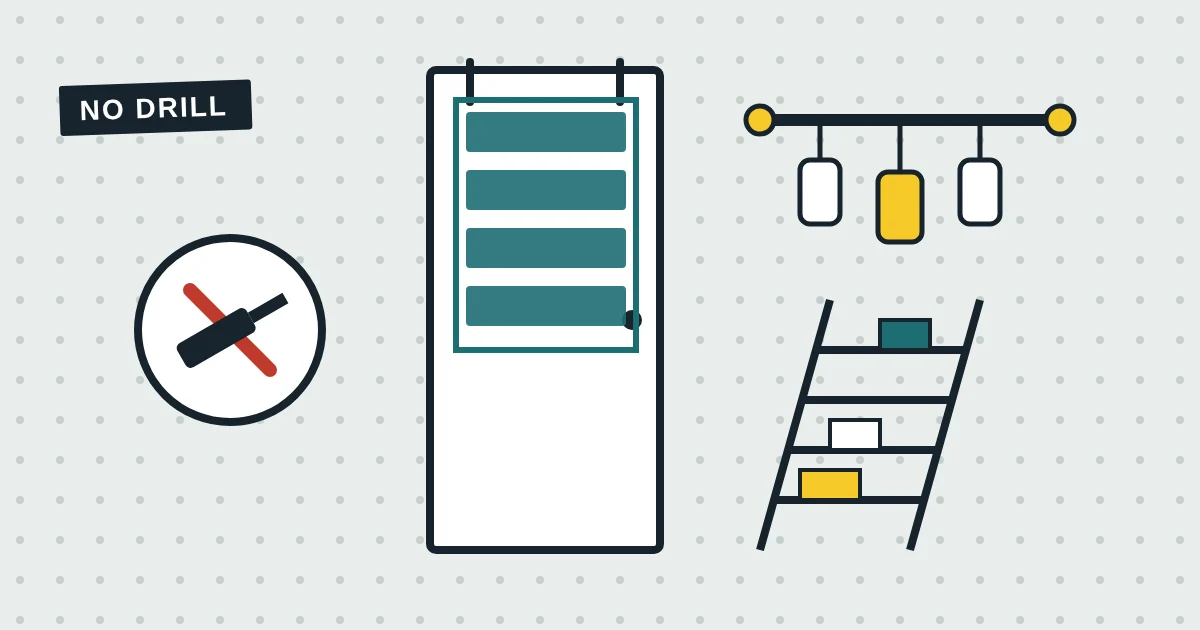
Short answer: four types of storage need no holes at all: over-the-door racks, tension rods and poles, freestanding pieces (leaning shelves, rolling carts, under-bed bins), and removable adhesive hooks. The first three work almost anywhere. Adhesive hooks only work on clean, smooth, painted walls, and they come off cleanly only if you remove them the right way.
Which no-drill method works on your wall
The most common reason a no-drill fix fails is a mismatch between the method and the surface. This table is our quick guide. For adhesive products, the surface rules come from the manufacturer’s instructions for Command strips; always read the package for the exact product you buy.
| Surface | Adhesive hooks | Tension | Over-door | Freestanding |
|---|---|---|---|---|
| Smooth painted drywall | Yes, within the weight rating | Between two walls | n/a | Yes |
| Freshly painted wall | Wait at least 7 days | Yes | n/a | Yes |
| Wallpaper | No | Pad the ends | n/a | Yes |
| Vinyl or vinyl-coated | May not stick | Yes | n/a | Yes |
| Bare or unpainted wood | No | Pad the ends | n/a | Yes |
| Glazed tile, glass, metal | Use a bath or water-resistant version | Shower alcoves | n/a | Yes |
| Doors | On painted panels | n/a | Yes, check the top gap | n/a |
| Textured or dusty walls | Unreliable: clean first, test one | Yes | n/a | Yes |
Two more rules from the same instructions: apply adhesive strips when the surface is above 50°F, and wait an hour before hanging anything on them.
15 no-drill storage ideas for renters
Over the door
1. An over-the-door pantry rack. A full-height wire rack with adjustable baskets turns a pantry or closet door into shelves for spices, snacks and cans. Check that the door still closes and that the baskets clear the shelves behind it.
2. An over-the-door shoe organizer. Clear pockets hold shoes, but also cleaning sprays, chargers, craft supplies or bathroom extras. It is one of the cheapest ways to add storage to any room.
3. Over-the-door hooks for towels, bags, robes and coats. Add felt pads where the hook touches the door to avoid scuffs, and make sure the door shuts with the hook in place.
Tension
4. Tension rods inside cabinets for spray bottles, cutting boards on their edges or baking sheets held upright.
5. A tension rod in a window or alcove to hang a curtain that hides an open shelf or a messy corner.
6. A floor-to-ceiling tension pole shelf in a corner or over the toilet. It holds shelves using pressure between floor and ceiling. Follow the weight rating and re-tighten every few weeks.
7. A tension shower caddy pole instead of a caddy that hangs on the shower head and slides down.
Freestanding
8. A leaning ladder shelf. It rests against the wall and takes up less floor space than a bookcase. Choose one with anti-tip hardware if you have children or pets, and use the strap with a removable anchor where your lease allows.
9. A slim rolling cart in the gap beside the fridge, the washer or the bathroom vanity. Even a 5 to 7-inch gap can hold spices, cleaning supplies or toiletries.
10. An over-the-toilet shelf unit that stands on the floor around the toilet, giving a small bathroom two or three shelves.
11. Bed risers and under-bed bins. Raising the bed a few inches can turn the space under it into a full closet’s worth of storage for off-season clothes and bedding.
12. Shelf risers and under-shelf baskets inside cabinets and closets. A riser doubles a shelf for plates or mugs; a basket that slides onto an existing shelf uses the empty air below it.
13. A freestanding garment rack when the closet is too small. Pair it with a fabric cover so it reads as furniture, not clutter.
Adhesive and magnetic
14. Removable adhesive hooks and strips on smooth painted walls for keys, light frames, cables and small baskets. Use the right size for the load, never exceed the rating, and read the next section before you remove them.
15. Magnets on metal surfaces. The side of the fridge is free wall space for a magnetic spice rack, paper towel holder or knife strip. Check the product’s weight limit; heavy items slide on smooth fridge doors.
Using adhesive hooks the right way
Adhesive hooks get blamed for peeled paint, but nearly always the problem is how they were put up or taken down.
- Clean the spot with rubbing alcohol (not household cleaners, which leave a film) and let it dry.
- Press the strip firmly for about 30 seconds.
- Wait one hour before hanging anything.
- Remove by holding the hook against the wall and stretching the tab slowly straight down along the wall, at least 12 inches, until it releases. Never pull it toward you.
Move-out day checklist
Before you hand back the keys
Your ticks are saved in this browser only.
Frequently asked questions
How can I add storage to an apartment without drilling?
Use four kinds of storage that need no holes: things that hang over a door, things held by tension between two surfaces, freestanding furniture such as leaning shelves and rolling carts, and removable adhesive hooks and strips on smooth painted walls. Match each one to the surface you have.
Do adhesive hooks damage walls?
Removable adhesive hooks are designed to come off cleanly when you stretch the tab slowly straight down along the wall, not when you pull them toward you. They do not work on wallpaper, may not stick to vinyl, and need freshly painted walls to cure for at least 7 days first, according to the maker of Command strips.
Are tension rods strong enough for shelves?
Tension rods hold light loads between two solid, parallel surfaces, such as the inside of a cabinet, a window frame or a shower alcove. Floor-to-ceiling tension poles can carry shelves. Check the weight rating on the package and never use them where a fall would hurt someone.
Can I hang things on my door without damaging it?
Over-the-door hooks and racks hang on the top edge of the door and need no screws. Check that your door closes with the hook in place, since some doors have a tight gap at the top, and add felt pads where the rack touches the door to prevent scuffs.
What should I check in my lease before adding storage?
Look for rules about holes, adhesives, paint and alterations, and how the security deposit is handled. Take dated photos of each wall when you move in, so you can show its condition when you move out.