 By
Short answer: one load of washing puts about 2 liters of water into the air as it dries, so where you dry matters as much as what you dry on. In a small apartment, dry in the bathroom with the fan on and the door shut, or by a window open a crack, and keep humidity under 60%, as the EPA advises. For the rack: a gullwing rack (about 58 by 22 inches open) dries a full load and folds to under 3 inches; a tripod rack for hangers needs only a 26-inch square of floor; a retractable line over the tub needs no floor at all. Keep everything at least 3 feet from a heater, and don’t count on a mini dehumidifier: the popular ones remove less than half a liter a day.
A note from Eugene: Half the apartments I rent out have no dryer, and in winter the first sign a tenant dries laundry in the bedroom is mold in the window corners. I haven’t owned all of the racks below. The moisture figure comes from a Glasgow School of Art study, the humidity limit from the U.S. Environmental Protection Agency (EPA), the heater distance from Mississippi State University Extension, and the sizes and owner complaints from each product’s Amazon listing and review summary, which I read on October 23, 2026.
Where the water goes
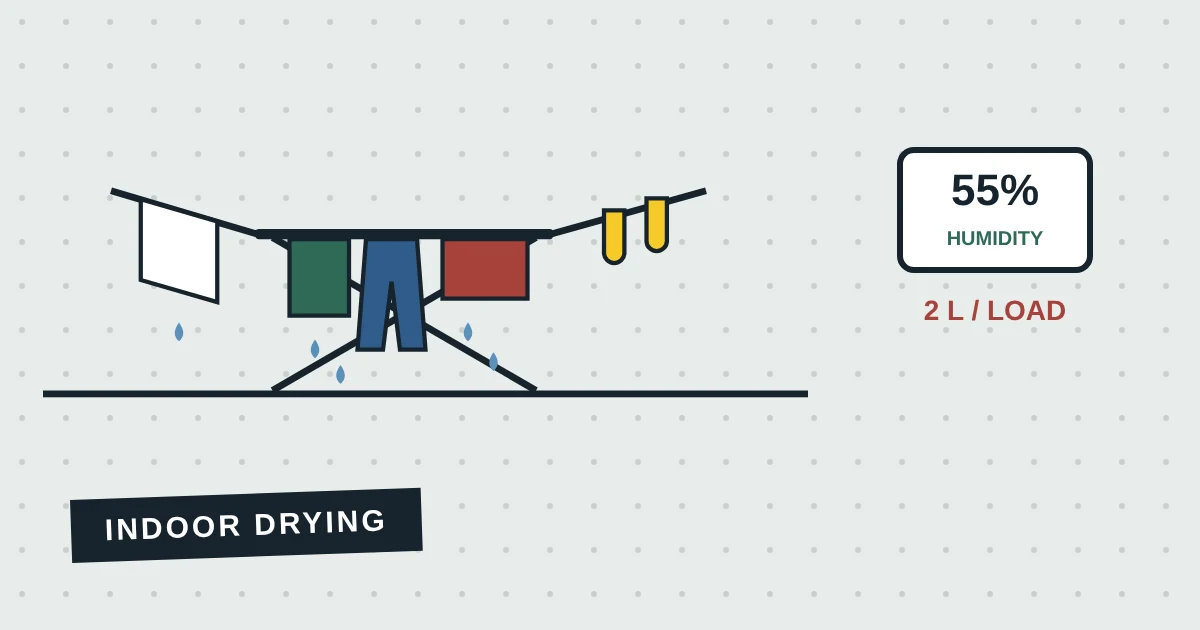
A spin cycle gets most of the water out, but not all of it. Researchers at the Mackintosh Environmental Architecture Research Unit of the Glasgow School of Art, working with Glasgow Caledonian and Strathclyde universities, found that an average load of washing releases around 2 liters of moisture into the air as it dries. When washing was draped on racks by radiators in poorly ventilated rooms, it could add up to a third of the room’s airborne moisture, the kind of damp in which mold spores and dust mites thrive.
| Loads a week | Water into the air | About |
|---|---|---|
| 1 | 2 liters | Half a gallon |
| 3 | 6 liters | 1.6 gallons |
| 5 | 10 liters | 2.6 gallons |
| 7 | 14 liters | 3.7 gallons |
In a house, that water spreads through a lot of air. In a 500-square-foot apartment with the windows shut for winter, it has nowhere to go, and it ends up on the coldest surfaces: window glass, exterior wall corners, the back of a wardrobe against an outside wall.
The trade-off is worth it, though. The EPA has said that clothes dryers use more energy than any other appliance in the home, so air drying saves real money, and it is gentler on clothes. You just need to dry in the right place.
Where to dry in a small apartment
The EPA’s advice for keeping mold out of a home is to keep indoor humidity below 60%, ideally between 30% and 50%, to run the bathroom fan or open a window when you shower, and to open doors and windows to increase ventilation when practical. Applied to laundry, that gives a clear order of places:
- The bathroom, fan on, door closed. The fan is built to pull moisture outside. A tension rod or retractable line over the tub catches the drips, too.
- A room with a window open a crack and its door closed, so the damp air leaves through the window instead of spreading.
- A balcony on dry days, if your building allows it.
- Last resort: a bedroom or living room with no ventilation. This is where the problems start. If you have no choice, put a humidity meter next to the rack and act when it reads over 60%.
Avoid drying in a closed closet, behind a sofa against an outside wall, or right next to the bed, where you breathe the damp air all night.
Drying space calculator
How much water, which rack fits, and where to dry
Measure the open floor where the rack would stand. Everything runs in your browser.
Rack sizes are the makers’ listed open dimensions. The 2-liter figure is an average from the Glasgow School of Art study; heavy towels and jeans hold more, synthetics less. You also need room to walk up to the rack, so add a little to the floor you measure.
Five ways to dry, compared
| Type | Floor space open | Folded | Holds (listed) | Trade-off |
|---|---|---|---|---|
| Gullwing rack | 58.3″ × 21.7″ | 2.8″ deep | 24 rods + 27 clips, 55 lb | Needs a clear 5-foot stretch of floor while open |
| Two-level gullwing | 61.8″ × 22″ | Flat | 33 rails + 27 clips, 77 lb | Same footprint, taller; for families |
| Tripod for hangers | 25.6″ × 25.6″ | 2.2″ × 2.2″ pole | Up to 27 pieces, 33 lb | Only for things on hangers; small items need clips |
| Retractable line | None | A small box on the wall | 16.4 ft of line, 40 lb | Needs screws in the wall; long lines sag |
| Clip hanger | None, hangs from a rod | Folds flat | 36 clips each | Socks and underwear only |
For most one- and two-person apartments, a gullwing rack in the bathroom doorway or by a window is enough for a full load. If your floor is tight, combine a tripod with shirts on hangers on the shower rod, and a clip hanger for small items.
How to dry a load faster
- Run an extra spin. Water the machine removes is water that never goes into your air.
- Hang shirts on hangers instead of folding them over a rod: they dry from both sides and come out with fewer creases.
- Leave a gap between items. A packed rack dries slowly in the middle; two half loads dry faster than one crammed load.
- Put towels and jeans on the outside rails and the top level, where the air moves.
- Turn heavy items halfway through.
- Point a fan at the rack if you have one. Moving air carries the moisture away from the fabric.
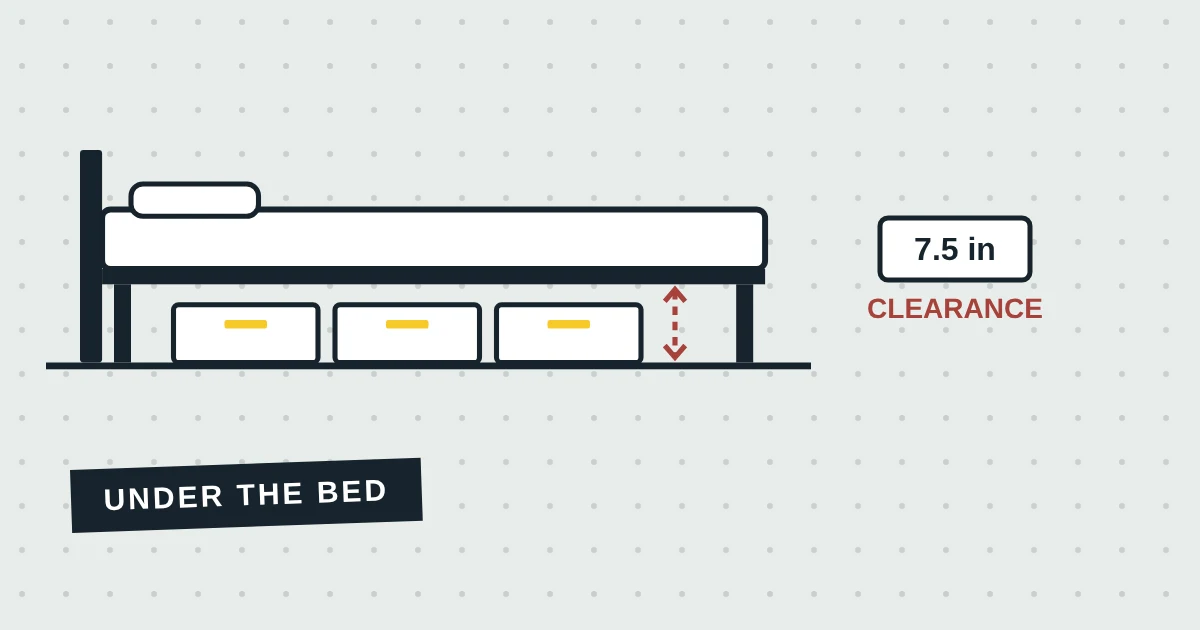
- Put clothes away only when fully dry. Damp clothes in a drawer or an under-bed box grow mildew; our under-bed storage guide explains why stored clothes must be completely dry.
Heaters and radiators
It is tempting to put the rack right next to a space heater in winter. Don’t. Mississippi State University Extension’s heating safety advice is to keep anything that can burn at least 3 feet away from heating equipment, and it lists clothing and bedding among the things that burn. Draping clothes on a space heater is how fires start.
Radiators are a different case, but the Glasgow study found that racks by radiators in poorly ventilated rooms were exactly where the moisture problem was worst. Warmth helps clothes dry, so a rack a few feet from a radiator, in a ventilated room, is fine; wet clothes draped over it in a closed bedroom are not.
Indoor drying checklist
Do you need a dehumidifier?
Start with a cheap humidity meter. If the room where you dry stays under 60% on laundry days, you don’t need anything else. If it climbs above 60% and stays there, a dehumidifier helps, but size matters.
The small “mini” dehumidifiers that sell by the thousands are not built for laundry. One of the most popular, a 35-ounce model with more than 17,000 ratings, lists a maximum of 16 ounces (450 ml) of water collected in 24 hours, in a closed small room at 86°F and 80% humidity. At that rate, one load’s 2 liters would take it more than four days. If you need one, look for a compressor dehumidifier rated in pints per day, and put the rack and the dehumidifier in the same small room with the door shut.
No room for a rack at all? Our no-drill storage guide shows how tension rods and over-door hooks free up wall and floor space without holes, and a tension rod over the tub doubles as a drying line.
What owners complain about
Amazon sums up each product’s reviews by topic and shows how many customers mention each topic positively or negatively. I read these counts on October 23, 2026, for the picks below and for two popular racks we decided not to recommend.
| Product | Most-mentioned problem | Customers mentioning it (positive / negative) |
|---|---|---|
| Honey-Can-Do gullwing rack (not picked) | Durability | 255 / 534 |
| Honey-Can-Do steel tripod (not picked) | Stability | 83 / 193 |
| SONGMICS gullwing rack | Sturdiness | 658 / 140 |
| SONGMICS tripod rack | Capacity | 124 / 18 |
| Max retractable clothesline | Line sagging | 46 / 68 |
| TempPro TP50 humidity meter | Reliability over time | 329 / 1,049 |
| Mini 35 oz dehumidifier (not picked) | Durability | 281 / 1,298 |
The lesson: the cheapest racks fail at the joints. The Honey-Can-Do gullwing rack has a useful 46 feet of drying space and almost 19,000 ratings, but twice as many owners complain about its durability as praise it. The SONGMICS rack it competes with has the opposite ratio for sturdiness, which is why it is our pick.
Drying racks for small apartments
Affiliate note: some links in this guide go to Amazon. As an Amazon Associate we earn from qualifying purchases, at no extra cost to you. We choose products for fit and specifications, not for the commission.
58.3″ × 21.7″ open, folds 2.8″.
Check on AmazonShopping on Black Friday? Add our top pick, the SONGMICS gullwing rack, to your Amazon cart now so it is ready when deals start.
How I chose
- I sorted racks by open footprint and folded depth, because floor is what a small apartment lacks.
- I compared listed capacity: rods, clips, hangers and weight limits.
- I read Amazon’s review topic counts and dropped two popular racks whose negative mentions outnumbered the positive ones on durability or stability.
- I checked each listing on October 23, 2026 for stock and U.S. delivery.
- I haven’t owned all of these. Picks are based on specifications and owner feedback, and I say what owners complain about.
Best for a full load: SONGMICS Foldable Gullwing Drying Rack
A steel rack with a center section and two wings that lift to three heights (39.4, 44.1 or 49.2 inches from the floor), so long trousers and sheets hang clear of the floor. It holds a full load, and folded it is 2.8 inches deep, thin enough to slide behind a door or between the washer and the wall. For a family, the two-level version has 33 rails and a 77-pound limit on almost the same footprint (61.8 by 22 inches).
- Sturdiness praised 658 times, criticized 140.
- Capacity: 628 positive, 14 negative.
- No screws or tools to assemble.
- Value for money: 115 negative mentions.
- Size: 76 negative mentions; open, it needs a 5-foot stretch of floor.
Warranty and returns: check the listing.
Skip it if you can’t clear about 5 feet by 2 feet of floor on laundry day; take the tripod instead.
Check it on AmazonSmallest floor: SONGMICS Tripod Drying Rack with 3 Rotatable Arms
A pole on four legs with three arms that hold hangers, about 59 inches tall. It takes a 25.6-inch square of floor, a quarter of a gullwing rack, and folds to a 2.2-inch pole for the closet. It is the best rack for shirts, dresses and anything that should dry on a hanger.
- Space saving praised 125 times, criticized 7.
- Ease of assembly: 280 positive, 12 negative.
- Arms rotate, so you can load it from one side.
- Value for money: 32 negative mentions.
- Capacity: 18 negative mentions; it is for hangers, not for towels and sheets.
Warranty and returns: check the listing.
Skip it if most of your laundry is towels, sheets and socks; they need rods and clips.
Check it on AmazonNo floor at all: Max Retractable Clothesline
A stainless steel box on the wall with a line that pulls out up to 16.4 feet and hooks onto a bracket on the opposite wall, with a tightener to keep it taut. Over a bathtub it is the ideal setup: drips land in the tub and the exhaust fan is right there. When you are done, the line retracts into the box.
- Installation praised 478 times, criticized 14.
- Space saving: 169 positive, 2 negative.
- Hardware included.
- Line sagging: 68 negative mentions against 46 positive; long lines with heavy towels dip in the middle.
- Stability: 73 negative mentions, often clothes sliding along the line.
Warranty and returns: check the listing.
Skip it if your lease forbids screws; both ends need fixing to a wall. Ask your landlord, or use a tension rod over the tub instead.
Check it on AmazonSocks and small items: Stainless Steel Clip Hangers, 2-Pack
Two rectangular hangers with 36 clips each and a swivel hook that goes over a shower rod, a closet rod or the rack. Socks and underwear take the most space on a rack for the least laundry; on a clip hanger they dry in a 16 by 12-inch square, in the air.
- Quality praised 49 times, criticized 4.
- Listed as anti-rust stainless steel, for a damp bathroom.
- Hangs anywhere a hook fits.
- Hanging: 4 negative mentions about how it hangs from the rod.
- Sturdiness: 4 negative mentions.
Warranty and returns: check the listing.
Skip it if your rack already has enough clips for your socks.
Check it on AmazonWatch the damp: TempPro TP50 Digital Humidity Meter
A small digital hygrometer that shows the room’s humidity and temperature, with a dry/comfort/wet icon and the day’s highs and lows. Put it next to the drying rack: if it stays under 60% on laundry days, your setup works. With almost 156,000 ratings, it is one of the most reviewed humidity meters on Amazon.
- Accuracy praised 5,889 times, criticized 2,032.
- Readability: 2,923 positive, 370 negative.
- Records highs and lows, so you can see what drying did overnight.
- Reliability: 1,049 negative mentions against 329 positive, the one topic where complaints win.
- Accuracy: about a quarter of the owners who mention accuracy say it reads off.
Warranty and returns: check the listing. If two meters disagree, trust the trend, not the exact number.
Skip it if you already have a smart thermostat or air purifier that shows humidity.
Check it on AmazonFrequently asked questions
Is it bad to dry clothes indoors?
Not if the moisture can leave. A Glasgow School of Art study found an average load releases about 2 liters of water as it dries, and racks by radiators in poorly ventilated rooms added up to a third of the room’s moisture. Dry in a bathroom with the fan on or by an open window, and keep humidity under 60%.
Where should I dry clothes in a small apartment?
In the bathroom with the exhaust fan running and the door closed, or in a room with a window open a crack and the door shut. Avoid closed bedrooms, closets and corners against outside walls.
How much space does a drying rack need?
A gullwing rack that holds a full load needs about 58 by 22 inches of floor when open and folds to under 3 inches deep. A tripod rack for hangers needs about a 26-inch square. A retractable clothesline over the tub needs no floor at all.
Can I dry clothes next to a space heater?
No. Mississippi State University Extension advises keeping anything that can burn, including clothing and bedding, at least 3 feet from heating equipment.
Will a small dehumidifier dry my laundry?
Usually not. A popular 35-ounce mini dehumidifier lists a maximum of 450 ml of water a day in warm, very humid air, while one load releases about 2 liters. If humidity stays above 60%, look for a compressor dehumidifier rated in pints per day.
The Small Space Fix is a participant in the Amazon Services LLC Associates Program. As an Amazon Associate we earn from qualifying purchases. Product details can change; check the current listing before you buy.
Sources
- The Glasgow School of Art: Research highlights health and economic problems caused by our indoor drying habits (2012)
- U.S. EPA: A Brief Guide to Mold, Moisture and Your Home
- U.S. EPA: First clothes dryers earn ENERGY STAR label (dryers use more energy than any other appliance)
- Mississippi State University Extension: How to use heating equipment safely
- Product sizes, capacities, ratings and review topic counts, including the mini dehumidifier’s listed water removal: each product’s Amazon listing, checked October 23, 2026.